
The Fall of the Nvidia Boss: Chips Are a Strategic Weapon; Europe Remains Technologically Vulnerable.
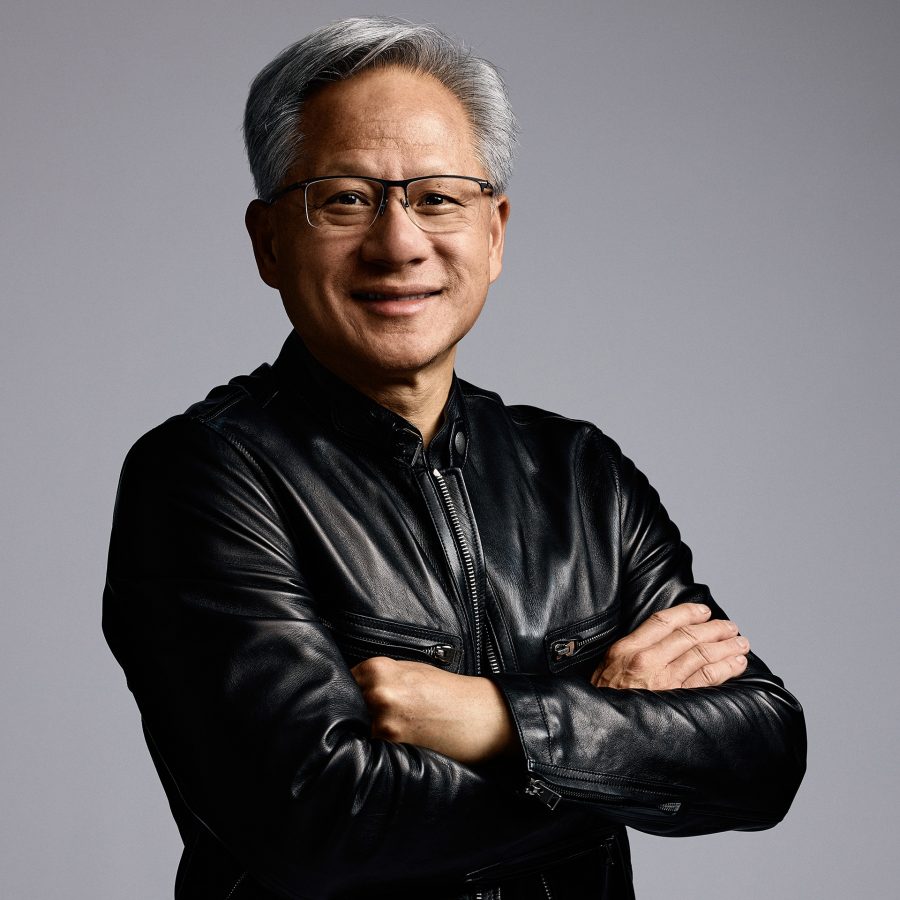
Jensen Huang—co-founder and long-time CEO of the American company Nvidia, which has become a primary supplier of chips for artificial intelligence—has resigned. He headed one of the most significant technology companies in the world today. However, Huang’s departure—marked by a controversial affair with security and geopolitical implications—is just one of several events highlighting the growing, critical importance of the semiconductor industry.
Microchip production has effectively become a strategic issue for the global economy. The modern world is dominated by information technology, with artificial intelligence serving as an increasingly vital driving force. Yet, without high-performance semiconductors, not only would the further expansion of AI grind to a halt, but so would significant portions of the automotive industry, telecommunications, the energy sector, industrial automation, and modern defense technology.
Chip production is concentrated within a relatively small number of countries and companies. According to OECD data, as of September 2025, five economies—Taiwan, South Korea, Japan, the United States, and China—accounted for approximately 87 percent of the world’s semiconductor manufacturing capacity.
This concentration is even more pronounced when it comes to state-of-the-art logic chips. Only a handful of companies are capable of their commercial production—most notably Taiwan’s TSMC, South Korea’s Samsung, and America’s Intel.
Taiwan represents a particularly sensitive point, serving as the key hub for the production of the most advanced semiconductors.
A potential military conflict, a blockade of the island, a natural disaster, or a large-scale shutdown of local factories could therefore have far-reaching consequences for global industry.
This would not be merely a problem for the Asian region. The repercussions would be felt by technology companies, automakers, and data center operators worldwide.
Europe’s dependence on foreign suppliers
The situation for the European Union is particularly unfavorable. According to an analysis by the European Parliamentary Research Service, semiconductor consumption in the EU reached approximately 55 billion euros in 2024. Imports from countries outside the Union accounted for 43.6 billion euros.
Consequently, European production covered only about 22 percent of its own consumption.
Regarding the most advanced chips—those below the five-nanometer threshold, which are crucial for applications such as artificial intelligence—the dependence on the US and Asia is almost total.
Yet, Europe is not a technological outsider across the entire semiconductor industry. For instance, the Dutch company ASML operates within Europe and holds a near-monopoly on the most advanced lithography equipment used in chip manufacturing.
European firms such as Infineon, STMicroelectronics, and NXP also hold significant positions.
The problem lies in the fact that while Europe possesses key technologies and manufacturers of specialized semiconductors, it fails to ensure sufficient production across the full spectrum of chips it requires. In short, Europe controls vital links in the supply chain, but lacks sufficient control over the chain as a whole.
The European Union is seeking to change the situation through the Chips Act, which aims to increase Europe’s share of global semiconductor production to 20 percent by 2030. Furthermore, in June 2026, the European Commission presented a proposal for a follow-up program, „Chips Act 2.0.“
This initiative is intended to strengthen European manufacturing capacity and reduce strategic dependence on foreign suppliers. Whether these ambitious goals can be achieved remains an open question.

|
Why the Nvidia Boss Stepped Down Jensen Huang, co-founder and CEO of the American company Nvidia for 33 years, resigned on November 12, 2026, from his positions as President, CEO, and member of the company’s Board of Directors. His departure was primarily driven by a personal scandal with serious implications for security and the company: Suspicion of circumventing export restrictions: Megaspeed was a customer for Nvidia chips. Questions arose as to whether American chips might have reached Chinese customers via Asian intermediaries, in violation of U.S. export restrictions. _ Another workplace relationship: Media outlets also reported on a relationship between Huang and another high-ranking Nvidia employee who reported to him. Internal investigation: Nvidia’s Board of Directors launched an independent investigation into potential foreign intelligence influence and associated corporate risks. Following this, Huang resigned. Nvidia has stated that it has no reason to believe its trade secrets or U.S. national security have been compromised. The Chinese side denies the espionage allegations. Chief Financial Officer Colette Kress has assumed interim leadership of the company. The Board of Directors has begun the search for a permanent successor. Note: Nvidia has not officially cited the personal scandal as the reason for the resignation. Its connection to the departure is inferred from the sequence of events and media reports. |
 _______________________________________
Chips as a Weapon in a Trade War
Semiconductors have become a key instrument in the technological and trade rivalry between the US and China. Washington is restricting the export of cutting-edge chips and manufacturing technologies to China in an effort to slow the country’s technological and military development.
Beijing, meanwhile, is striving for technological self-sufficiency, leveraging its strong position in the supply of certain strategic raw materials.
Consequently, chips are no longer merely standard commercial goods; they have become a strategic commodity, the availability of which governments can use as a tool for economic and political pressure.
Nvidia plays a significant role in this rivalry. Its powerful graphics processing units (GPUs) have become a fundamental building block of artificial intelligence infrastructure.
Therefore, restrictions on their export to China represent not only a commercial challenge for the company itself but also a component of a broader US strategy to technologically constrain Chinese competition.
Artificial Intelligence Has Sparked a New „Chip Rush“
The rise of generative artificial intelligence has triggered extraordinary demand for high-performance semiconductors. Major technology companies are investing tens to hundreds of billions of dollars into data centers, computing infrastructure, and AI development.
This places intense pressure on manufacturers of graphics processors, memory, and other specialized components.
It is not just about the chips themselves; advanced packaging and the production of high-bandwidth memory—essential for powerful AI systems—are also critical parts of the equation.
Raw materials and manufacturing supplies present a further complication. In addition to ultra-pure silicon, the semiconductor industry requires special gases, chemicals, and elements such as gallium and germanium.
China holds a significant position in the processing and supply of these materials and has imposed export restrictions on some of them. Thus, strategic dependence does not end with the chips themselves but extends to the supply chain required for their production.
Is a new industrial investment bubble looming?
The US, China, the European Union, Japan, and other economies are investing vast sums into building their own semiconductor production capacities. The goal is to reduce reliance on foreign suppliers and secure access to technologies that are critical for future industrial competitiveness.
However, constructing modern chip factories requires investments on the order of tens of billions of dollars. Moreover, money alone is not enough; production demands specialized technologies, a skilled workforce, extensive experience, and a stable supply of energy and materials.
At the same time, there is a risk that—driven by the current boom—governments and private investors may build production capacities that exceed what the market will be able to absorb in the future.
The semiconductor industry is inherently cyclical. Periods of shortages and high demand can give way to phases of overproduction, falling prices, and deteriorating financial performance for manufacturers.
The world is thus finding itself in a paradoxical situation. On one hand, there is an effort to secure a sufficient supply of chips for an increasingly digitized economy; on the other, vast resources are being invested in an industry whose future trajectory is difficult to predict.
One thing is certain: the importance of semiconductors will continue to grow alongside the advancement of artificial intelligence, digitalization, and automation. Consequently, control over their production will be a key prerequisite for future economic and technological power.
The European Union is aware of this reality, yet its current reliance on foreign suppliers highlights just how challenging it will be to regain lost ground.