Elections and politics under the influence of a billionaire: Musk sends hundreds of millions of dollars to Republicans.
The U.S. Congressional elections have once again brought to the fore the issue of the ties between the business elite and the political elite. The wealthiest person on the planet, Elon Musk, is funneling hundreds of millions of dollars to the Republicans. Similar instances – albeit on a smaller financial scale – can also be found in Europe.
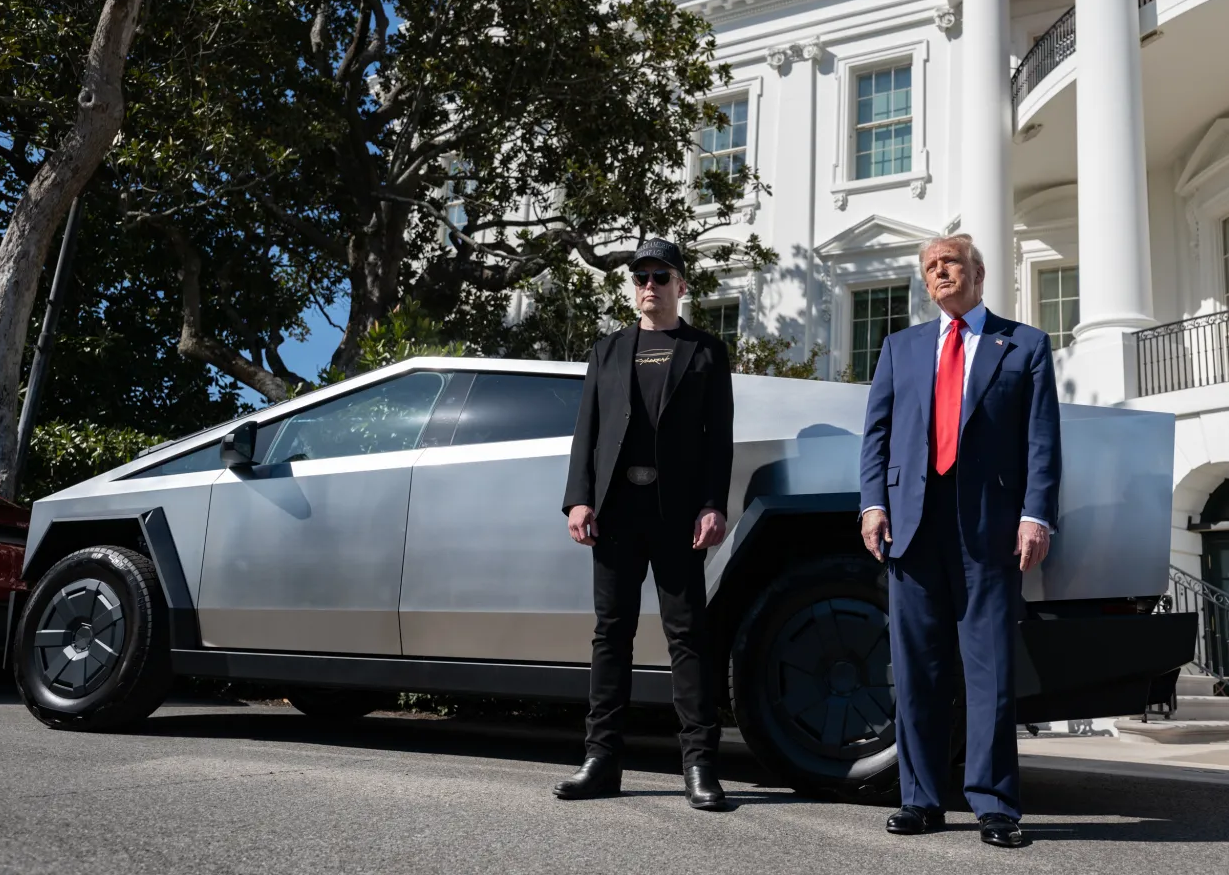
The wealthiest entrepreneurs have once again entered the electoral battle for control of the U.S. Congress, backing their preferred politicians with sums that ordinary citizens – and even most companies – could scarcely imagine. The most prominent example is Elon Musk, owner of Tesla and SpaceX.
Ahead of the 2026 Congressional elections, Musk spent approximately $366 million to support Republican candidates and their political activities. Of this total, $276 million consisted of contributions made from July 2026 onwards.
A significant portion of these funds was channeled through political organizations that support Republican candidates. For instance, the Republican Senate Leadership Fund received $158 million, while another $76 million went to Musk’s own organization, America PAC.
Musk thus ranks among the largest individual financial backers in the history of American politics. His involvement, however, is not limited to this year’s elections. As early as 2024 – when Donald Trump was seeking a return to the White House – Musk contributed approximately $291.5 million to support Republican candidates and political organizations.
However, it is important to distinguish between direct donations to a political party and the funding of independent political organizations. In the American system, there are so-called „Super PACs,“ which can raise and spend unlimited funds to support or criticize candidates.
However, they are prohibited from coordinating their election-related spending directly with the candidates‘ campaigns.
Musk’s financial involvement is also notable given the scope of his business interests. His companies operate in sectors significantly influenced by decisions made by the U.S. federal government – such as the aerospace, automotive, and energy industries.
American billionaires fund both political parties
Musk is certainly not the only American entrepreneur pouring substantial sums of money into politics. According to an analysis by the organization OpenSecrets, a group of top individual donors contributed over $100 million to support political candidates and organizations during the 2024 election cycle.
Among the most prominent were:
Timothy Mellon – an investor and heir to a significant family banking fortune. He contributed approximately $197 million to political activities, primarily in support of Republicans.
Miriam Adelson – an American billionaire with ties to the gambling industry and widow of Sheldon Adelson, the founder of Las Vegas Sands. She contributed approximately $148.3 million to support Republican political activities.
Richard and Elizabeth Uihlein – a married couple behind Uline, a major supplier of packaging materials. They contributed approximately $143.5 million to support Republican candidates and organizations.
Kenneth Griffin – founder of the investment firm Citadel and a prominent American hedge fund manager. He supported Republican candidates and organizations with approximately $108.4 million.
Jeffrey and Janine Yass – entrepreneurs associated with the investment and trading firm Susquehanna International Group. They contributed approximately $101.1 million to political activities.
However, the Democrats also have large business supporters:
Michael Bloomberg, founder of financial and media company Bloomberg LP and former mayor of New York City, has given approximately $64.3 million in 2024 to support Democratic political activities.
Another prominent Democrat supporter was Dustin Moskovitz, co-founder of Facebook and founder of software company Asana. His contributions totaled approximately $50.7 million.
Interestingly, the American political system allows extremely wealthy individuals to make significant financial contributions to political candidates and their campaigns, regardless of whether they are Republicans or Democrats.
The Koch brothers: a billionaire family with a longstanding influence on American politics
Brothers Charles and David Koch are also among the most famous American business families associated with political financing.
They built the Koch Industries business empire, which operates in energy, chemical, manufacturing, agriculture and other industries. Their family fortune has been among the largest in the United States for decades.
The Koch brothers were heavily involved in supporting conservative American politics. They financed political candidates, organizations and initiatives promoting lower taxes, restrictions on state intervention in the economy and a freer business environment.
A significant part of their political activity was the building of the organization Americans for Prosperity, which became one of the most important conservative political organizations in the USA.
David Koch died in August 2019 at the age of 79. Charles Koch, born in 1935, lives and continues to be the head of the Koch business group.
The story of the Koch brothers shows that the financial involvement of billionaires in American politics is nothing new.
Elon Musk has only pushed the financial scale of this phenomenon to an extraordinarily high level.
European political millions
The financing of political parties by wealthy businessmen is not exclusively an American issue. Although the European examples are generally less extensive financially, in some cases they are also extremely high contributions.
One of the most prominent current European cases is British businessman Christopher Harborne.
Harborne does business in the aerospace industry and also invests in technology companies. His name came to the forefront of the British media in connection with the financial support of the Reform UK party, led by Nigel Farage.
In August 2025, he made a donation of nine million pounds to the party. It was one of the largest single financial contributions to a political party in British history.
According to the records of the British Electoral Commission, Harborne Reform UK also provided other significant funds. His donations thus represent one of the most significant examples of individual funding of British politics.
Reform UK sets itself apart from traditional British parties and advocates, among other things, a stricter immigration policy, reduced regulation and fundamental changes in the British political system.
Harborne’s case shows that even in European conditions a single businessman can provide a political party with funds of the order of many millions of pounds.
Germany: Billionaires from the Automotive and Pharmaceutical Industries
In Germany, too, there are well-documented instances of wealthy entrepreneurs providing significant financial support to political parties.
Of particular note are siblings Susanne Klatten and Stefan Quandt, who rank among the wealthiest Germans and are major shareholders in the automotive group BMW.
According to the investigative portal *abgeordnetenwatch*, the two have collectively contributed nearly four million euros since 2002 to support the German political parties CDU and FDP.
Their financial involvement has been long-standing. In the past, the timing of certain substantial contributions to the CDU—coinciding with political decisions affecting the automotive industry—has also drawn attention. The entrepreneurs themselves, however, have denied any link between their donations and specific government decisions.
Another example involves entrepreneurs Andreas and Thomas Strüngmann, whose wealth is primarily tied to the pharmaceutical industry and an investment in the company BioNTech.
In November 2024, their holding company, Athos KG, provided a donation of 170,000 euros to the German CDU.
These German examples demonstrate that political parties can secure significant funding directly from entrepreneurs who built their fortunes in both traditional industrial sectors and the modern pharmaceutical industry.
Differences Between the American and European Models
There are significant differences between the United States and European countries regarding the rules governing the financing of political parties. The American system allows for the collection and expenditure of exceptionally large sums of money through independent political committees.
Consequently, individual entrepreneurs can become financial backers of political campaigns, contributing amounts reaching into the hundreds of millions of dollars.
In Europe, rules vary from country to country. For instance, in France, direct corporate funding of political parties is prohibited, whereas in Germany and the United Kingdom, corporate donations are permitted, subject to specific conditions.
The cases of Elon Musk, the American Koch brothers, the British national Christopher Harborne, and various German business families demonstrate that the relationship between big business and politics has a very tangible financial dimension.
Of course, a financial contribution does not automatically imply that an entrepreneur is purchasing a political decision or expecting a specific quid pro quo in return for their donation.
Nevertheless, it raises the question of the extent to which the exceptionally large contributions from the wealthiest individuals can influence the political landscape, the priorities of political parties, and the degree to which those parties become dependent on a narrow circle of their most financially powerful backers.